The complete guide · EASA regulations

How to become an airline pilot

From your first flight to the right-hand seat of an airliner: PPL, ATPL theory, CPL, IR, ME, UPRT and MCC. Every stage of the modular route, explained step by step.

15 min read

0

experience needed to start

≈ 200 h

of flying up to the commercial licence

13

ATPL theory exams

18 months

of intensive training at ESA

In brief: the road to the flight deck

In Europe, the airline pilot profession is governed by EASA, the European Union Aviation Safety Agency. The rules are the same in every member state: a licence earned in Greece, France or Spain carries exactly the same weight and lets you work for any European airline.

Contrary to popular belief, there is no single “airline pilot” exam. You build up a stack of licences and ratings, each one unlocking the next: the Private Pilot Licence (PPL), the airline pilot theory (ATPL theory), the Commercial Pilot Licence (CPL), then the Instrument Rating (IR) and multi-engine rating (ME), rounded off with UPRT and MCC.

At the end you hold what the industry calls a “frozen ATPL”: everything required to be hired as a First Officer. The full ATPL, the captain's licence, is then “unfrozen” with experience, at 1,500 flight hours.

This guide walks through each stage: what the regulations require, what you actually learn, how long it takes, and how the route works in practice at École Supérieure d'Aviation.

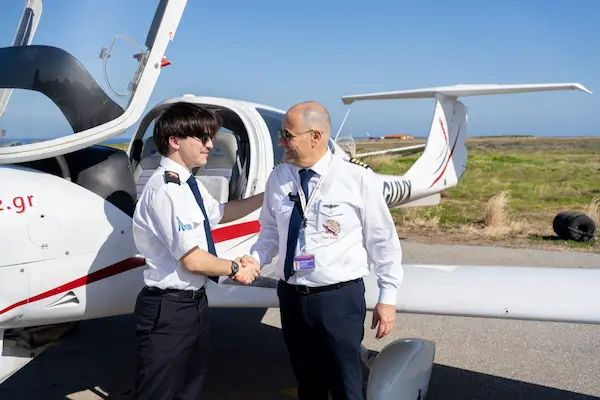
Student pilot at the controls over Crete

The essential glossary

Aviation loves an acronym. Here are the ones you will meet throughout this guide, and throughout your training.

EASA
European Union Aviation Safety Agency. It sets the common rules (Part-FCL) for pilot licences in Europe.
ATO
Approved Training Organisation. Only an ATO may deliver professional pilot training.
PPL(A)
Private Pilot Licence (Aeroplane). The starting point of the modular route.
ATPL theory
The 13 airline pilot theory exams. The biggest academic hurdle of the journey.
CPL(A)
Commercial Pilot Licence: the licence that allows you to be paid to fly.
IR
Instrument Rating: flying without outside visual reference, in cloud and in controlled airspace.
ME / MEP
Multi-Engine Piston: the class rating for piston-engined multi-engine aeroplanes.
A-UPRT
Advanced Upset Prevention and Recovery Training: preventing and recovering from loss of control in flight.
MCC
Multi-Crew Cooperation: training in working as a crew, mandatory before a first multi-pilot type rating.
FCL.055
The aviation English language proficiency requirement (Level 4 minimum).
TR
Type Rating: the training specific to one airliner type, such as the A320 or B737.
PIC
Pilot in Command. “PIC” hours are those where you alone are responsible for the flight.

Two regulatory routes: integrated or modular

European regulations provide two ways of reaching exactly the same result. The licences are identical: nothing on your licence shows which route you took, and airlines recruit from both.

Integrated training

One block, full time

  • A single continuous course in one ATO, from day one to the commercial licence.
  • You begin with several months of ATPL theory before doing much flying.
  • An all-in commitment from the start: the course is followed as one block, with no intermediate exit.
  • No PPL along the way: you must finish the course to hold a licence at all.

Modular training

Step by step

  • The route is split into independent modules: PPL, ATPL theory, CPL, IR, ME…
  • You fly from the very first weeks, working towards the Private Pilot Licence.
  • Every stage you pass is yours for good: a licence or rating in your name.
  • Can be done part time over several years, or in a structured, intensive format.

ESA's choice: the full modular course

ESA takes the best of both worlds: the safety of the modular route (you fly straight away, every stage is banked), delivered with the pace and structure of an integrated course: one class, one schedule, 18 months.

Read the guide: full modular training

Before you start: the prerequisites

The good news: no aviation experience is needed, and you do not have to come from a science background. There are, however, four things to check before you commit.

A Class 1 medical

This is the only truly eliminatory prerequisite, which is why it should come first, before any commitment. The initial examination takes place at an Aeromedical Centre (AeMC). The certificate is then renewed every 12 months.

Age and education

You must be 17 to hold a PPL and 18 for the CPL. ESA asks for a secondary school leaving qualification (A-levels, baccalauréat or equivalent) in any subject area. The maths level expected at selection is that of a 15-year-old: proportions, unit conversions, basic trigonometry.

English

English is the working language of aviation: radio, documentation, ATPL exams. You need not be fluent at the start, but you must be able to follow a lesson and be ready to improve fast. Training abroad, in full immersion, is by far the most effective method.

Nationality and right to stay

To train and work in Europe you must be an EU citizen or hold a visa covering the full duration of the course.

The modular route in 9 stages

Here is the full journey, in the order you will take it. For each stage: the minimum EASA requires, then how it works at ESA.

  1. 1The Private Pilot Licence: PPL(A)
  2. 2Night rating and hour building
  3. 3ATPL theory
  4. 4The Commercial Pilot Licence: CPL(A)
  5. 5The Instrument Rating: IR
  6. 6The multi-engine rating: MEP
  7. 7Advanced UPRT
  8. 8Aviation English: FCL.055
  9. 9MCC or APS MCC: working as a crew
Instructor and student pilot during the pre-flight check of a DA40
1

The Private Pilot Licence: PPL(A)

4 to 6 months

This is where it all begins: you learn to fly. Take-offs, landings, circuits, simulated failures, visual navigation… up to the unforgettable day of your first solo, alone on board. The PPL lets you fly privately, by day, with passengers, without being paid.

What EASA regulations require

  • At least 45 flight hours, including 25 h dual instruction and 10 h supervised solo.
  • 5 h of solo cross-country, including one flight of at least 270 km (150 NM) with full-stop landings at two aerodromes other than the departure one.
  • A theory exam in 9 subjects (air law, meteorology, navigation, human performance, communications…), with a 75% pass mark.
  • A skill test with an examiner. Minimum age: 17 (16 for the first solo).

How it works at ESA

  • Around 50 flight hours on the Diamond DA40, from Heraklion International Airport.
  • Flights on average 3 times a week, Monday to Friday.
  • Theory and flying entirely in English from day one.

ESA's advice : Flying from an international airport from the PPL onwards changes everything: radio in English, commercial traffic, real procedures. What feels daunting at first soon becomes second nature.

Aerial view of an airfield on a Greek island during a cross-country flight
2

Night rating and hour building

alongside ATPL theory

With your PPL in hand, you need to build experience as pilot in command: this is hour building. You fly cross-country, alone or with your training partner; you make the decisions and manage the weather, the fuel and the unexpected. It is also the time to add the night rating, which you will need later.

What EASA regulations require

  • Night rating: 5 h of night flying, including 3 h dual, 1 h of cross-country navigation and 5 solo take-offs and full-stop landings.
  • 150 total flight hours are required to start the CPL course.
  • For CPL issue: 200 flight hours, including 100 h as PIC and 20 h of cross-country, with one 540 km (300 NM) flight.
  • For the IR: 50 h of cross-country as PIC.

How it works at ESA

  • Around 100 flight hours as pilot in command, out of Heraklion.
  • Cross-country flights to the other airfields of Crete and the Greek islands.
  • Hour building runs alongside ATPL theory: alternating classroom and cockpit keeps your flying sharp.

ESA's advice : Use this phase to travel! Fly with your partner, take passengers, vary your destinations. “Useful” hours are worth far more than hours spent circling the same airfield.

ESA student pilots in a group study session
3

ATPL theory

9 to 12 months

This is the academic summit of the journey: the whole of airline pilot theory, in one go. It is demanding, mostly because of the volume, but entirely achievable with method and consistency. Once you hold all 13 passes, you never have to sit them again.

What EASA regulations require

  • Hold a PPL(A), then complete 650 hours of theoretical instruction at an ATO.
  • 13 official multiple-choice exams, each with a 75% pass mark, plus an “Area 100 KSA” (knowledge, skills and attitudes) assessment run by the school.
  • 18 months to pass everything from your first exam, within 6 sittings and 4 attempts per subject.
  • Once passed, the theory remains valid for 36 months for the issue of the CPL and IR.

How it works at ESA

  • 300 hours of classroom teaching by professional instructors, plus around 350 hours of self-study.
  • In-person classes of around 12 students rather than distance learning: interaction with the instructor makes the difference.
  • 13 official exams spread over 3 sittings, at an approved exam centre.
  • 96% first-time pass rate in ATPL theory.

The 13 ATPL theory subjects

  1. 1Air law and ATC procedures
  2. 2Airframe, systems, electrics and powerplant
  3. 3Instrumentation
  4. 4Mass and balance
  5. 5Performance
  6. 6Flight planning and monitoring
  7. 7Human performance and limitations
  8. 8Meteorology
  9. 9General navigation
  10. 10Radio navigation
  11. 11Operational procedures
  12. 12Principles of flight
  13. 13VFR / IFR communications

+ the cross-cutting Area 100 KSA module, assessed by the school.

ESA's advice : You cannot cram the ATPL: you work at it every day. Two to three hours of question bank daily, in a study group, beats sleepless nights in exam week.

Student pilot and instructor in front of a training aircraft
4

The Commercial Pilot Licence: CPL(A)

about 6 weeks

The CPL is the licence that makes you a professional: it allows you to be paid to fly. The course no longer teaches you to fly, but to fly with a professional's accuracy and discipline: tight tolerances, failure management, navigation with diversions, decision-making.

What EASA regulations require

  • Prerequisites: PPL(A), 150 flight hours and ATPL (or CPL) theory passed. Minimum age: 18.
  • 25 hours of flight instruction, including 10 h of instrument flying. 15 h is enough if you already hold an IR.
  • Part of the course on a “complex” aeroplane: variable-pitch propeller and retractable gear.
  • A skill test with an examiner.

How it works at ESA

  • A short familiarisation, then training on the DA40 and a multi-engine aeroplane.
  • One-to-one briefing and debriefing for every flight.
  • Exam included.

ESA's advice : Arrive at the professional phase with recent hour building behind you: a pilot who has just flown 100 hours progresses far faster than one coming back from a six-month break.

Instrument flight simulator
5

The Instrument Rating: IR

2 to 3 months

An airliner flies in all weathers, in cloud, at night, with no visual reference at all. The IR teaches you to fly solely on instruments and to follow IFR procedures: departures, routes, holds, precision approaches. It is the most technical rating of the journey, and the heart of the job.

What EASA regulations require

  • Prerequisites: PPL or CPL, night rating, 50 h of cross-country as PIC and theory passed.
  • 50 hours of instrument time for a single-engine IR, 55 hours for a multi-engine IR, a large share of which may be flown in a simulator.
  • Performance-Based Navigation (PBN) is part of the course.
  • A skill test, then revalidation every 12 months.

How it works at ESA

  • 38 hours on the Alsim AL250 simulator, then putting it into practice in the DA40 and the twin.
  • Single-engine IR followed by conversion to multi-engine IR, PBN module included.
  • Real approaches at a fully equipped international airport (ILS, RNP), in among commercial traffic.

ESA's advice : IFR is all about method: rehearse every session on paper first, call-outs and checklists included. The simulator is for practising the procedure, not discovering it.

Cretan Eagle Aviation Piper Seneca twin
6

The multi-engine rating: MEP

1 to 2 weeks

Airliners have more than one engine: you must learn to manage two, and above all to manage the failure of one of them. Asymmetric flight, engine failure after take-off and the single-engine approach are the core of this class rating.

What EASA regulations require

  • Prerequisite: 70 flight hours as PIC.
  • 7 hours of dedicated theoretical training.
  • At least 6 flight hours: 2 h 30 of normal operations and 3 h 30 devoted to engine failures and asymmetric flight.
  • A skill test, then revalidation every 12 months.

How it works at ESA

  • Training on the Piper Seneca II twin.
  • Around 16 h 30 of multi-engine flying in total across the MEP, CPL and ME IR.
  • Exam included.

ESA's advice : Learn the engine-failure memory items by heart, on the ground. In the air they must come out without thinking.

Training aircraft taking off from Heraklion
7

Advanced UPRT

a few days

Loss of control in flight is one of the leading causes of serious accidents in commercial aviation. Advanced UPRT exposes you, in a real aircraft and in complete safety, to unusual attitudes (steep bank, extreme pitch, developed stalls) so that you learn to prevent them, and to recover from them, despite the startle effect.

What EASA regulations require

  • Mandatory since December 2019 before any first type rating on a multi-pilot aeroplane.
  • 5 hours of theory and 3 hours of dual flight instruction in a suitable aeroplane.
  • No exam: the ATO issues a course completion certificate.

How it works at ESA

  • Included in the programme and flown on a single-engine aeroplane.
  • No extra training centre to find at the end of your course.

ESA's advice : Many programmes do not include UPRT. Always check it is part of yours: without it you cannot start a type rating.

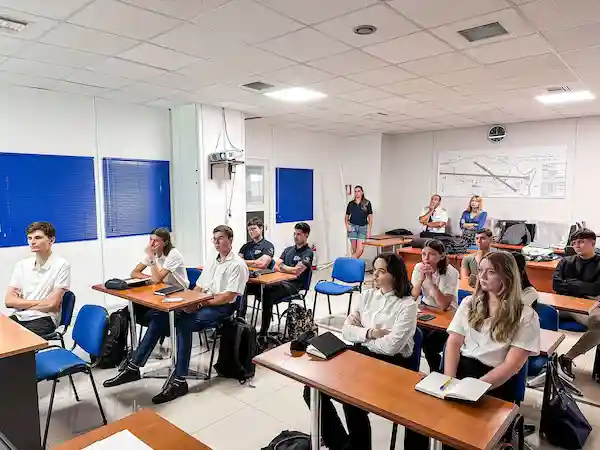
A class of student pilots in a classroom in Heraklion
8

Aviation English: FCL.055

one exam, prepared throughout the course

To fly IFR and internationally, your licence must carry an English language proficiency endorsement. The test assesses listening and speaking in aviation situations: phraseology, but also plain English for handling an unusual situation.

What EASA regulations require

  • Level 4 (“operational”) minimum on a scale of 6.
  • Validity: 4 years at Level 4, 6 years at Level 5, unlimited at Level 6.
  • Airlines often look for Level 5 or above when recruiting.

How it works at ESA

  • 100% of training in English and abroad: classes, radio, everyday life.
  • The FCL.055 exam is included and taken at the end of the course, when your English is at its best.

ESA's advice : Do not wait for the exam to get started: series, podcasts, listening to live ATC online… Immersion does the rest.

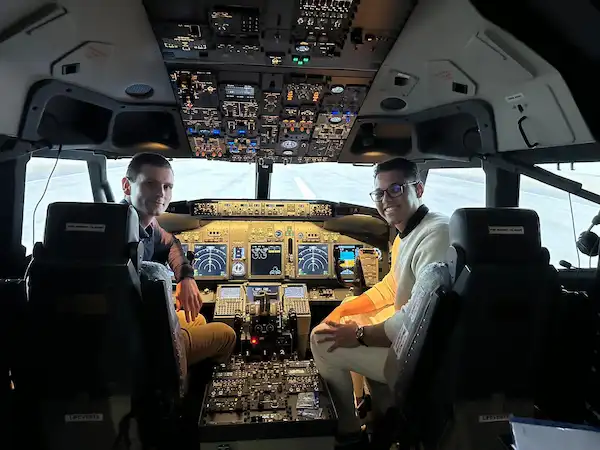
Two ESA students in a Boeing 737 simulator during their MCC
9

MCC or APS MCC: working as a crew

2 to 4 weeks

So far you have learned to fly alone. But an airliner is flown by two. The MCC teaches you to work as a crew: sharing tasks between pilot flying and pilot monitoring, communication, checklists, decision-making, workload management. It is the last step before you apply.

What EASA regulations require

  • MCC: 25 hours of theory and 20 hours of practice in a multi-pilot simulator.
  • APS MCC (Airline Pilot Standards): an enhanced version, around 40 simulator hours, on a jet, to airline standards, with a final assessment.
  • The MCC is mandatory before a first type rating on a multi-pilot aeroplane.

How it works at ESA

  • Optional at the end of the course, at a partner centre in France or elsewhere in Europe.
  • Standard MCC: distance-learning theory and 20 h in an approved simulator.
  • APS MCC: distance-learning theory and 38 h in an approved simulator.
  • A third option: a type rating with an airline interview at the end.

ESA's advice : More and more airlines value, or even require, the APS MCC. If you are aiming at a major European carrier, it is often the best choice.

Hours and durations: the summary table

Regulatory minimums are a floor. The real volume depends on each student's progress: the ESA figures are those of the Airline Pilot programme.

StageEASA minimumAt ESA
PPL(A)45 flight hours · 9 exams≈ 50 flight hours on DA40
Hour building + night rating100 h PIC · 5 h at night≈ 100 flight hours as PIC
ATPL theory650 h of tuition · 13 exams300 h in class + 350 h self-study
CPL · IR · ME25 h CPL · 55 h ME IR · 6 h MEP≈ 50 flight hours + 38 h simulator
Advanced UPRT5 h theory · 3 h flyingIncluded
English FCL.055Level 4 minimumExam included
MCC / APS MCC20 to 40 simulator hoursOptional: 20 h or 38 h

Total at ESA, excluding options

≈ 200 h

of flying

38 h

of simulator

≈ 770 h

of theory

18 months

of training

The ESA route at a glance

  1. about 14 months

    Initial phase

    • Private Pilot Licence
    • Hour building
    • ATPL theory
  2. about 4 months

    Professional phase

    • Commercial Pilot Licence
    • IR / ME rating
    • UPRT Advanced
  3. 1 to 3 months

    Advanced phase (optional)

    • MCC
    • or MCC-APS
    • or type rating + airline interview
  4. Airline pilot

After the licence: from “frozen” ATPL to captain

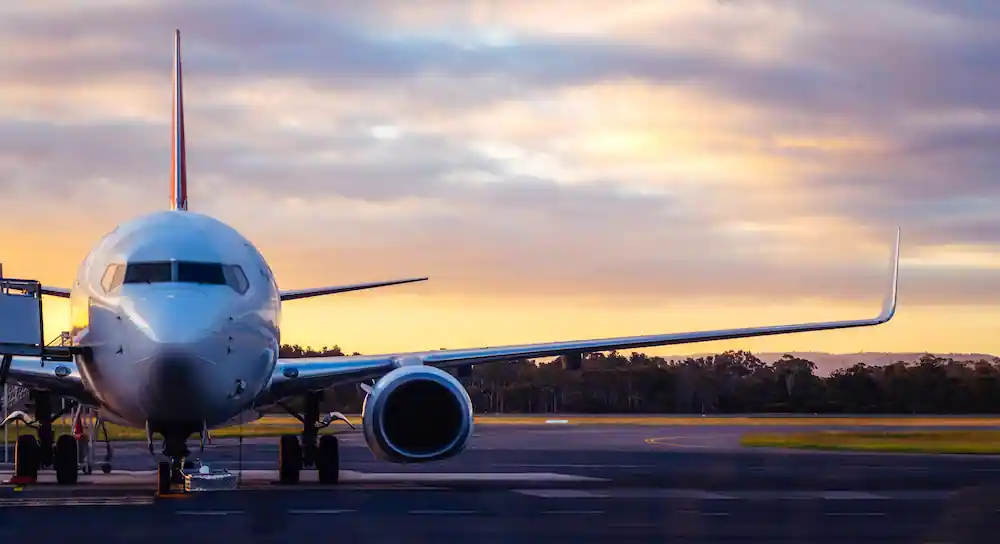
Boeing 737 taxiing at sunset

1. The “frozen” ATPL

CPL + multi-engine IR + ATPL theory + MCC (+ UPRT): this is the full package airlines ask for in a First Officer. It is called “frozen” because the theory is banked, but the ATPL itself is waiting for your experience.

2. Airline selection

Application, aptitude tests, group exercises, technical and HR interviews, simulator assessment: recruitment is a competition in its own right, and it takes preparation. With equal licences, it is English, attitude and preparation that make the difference.

3. The type rating

Once hired, you are trained on the airline's aircraft (A320, B737, ATR, Embraer…): several weeks of systems courses and simulator, then a few circuits in the real aeroplane.

4. Line training

Your first commercial flights carry passengers, alongside a training captain. At the end of this period you are released to the line: you are officially a First Officer.

5. “Unfreezing” the ATPL

At 1,500 flight hours (including 500 h in multi-pilot operations, 200 h cross-country, 100 h at night and 75 h on instruments), you take the ATPL skill test. The full licence makes you eligible for command, usually reached after 5 to 10 years depending on the airline.

At ESA: the “Find the RIGHT seat” programme

Support does not stop at the licence. Career strategy, preparation for technical and non-technical interviews, aptitude tests, sessions on the school's B737 simulator: graduates are supported until they are hired.

Discover the programme

Careers and pay

The commercial licence does not only open the doors of the major airlines. It gives access to a whole family of careers.

  • Airline pilot (short, medium and long haul)
  • Business aviation pilot
  • Specialist pilot: air ambulance, cargo, air taxi, sightseeing
  • Flight or ground instructor
  • Operations officer, flight dispatcher

How much does an airline pilot earn?

Junior First Officer

under 500 flight hours

≈ €3,200 / month

Experienced First Officer

over 1,500 h, around 3 years

≈ €5,300 / month

Captain

over 5 years' experience

≈ €10,900 / month

Average 2025 pay including allowances and benefits, gathered from airlines that recruit large numbers of newly qualified pilots (source: ESA brochure). Differences between airlines are significant.

The ESA route: the whole journey in 18 months

ESA's Airline Pilot programme follows exactly the stages described in this guide, in a setting designed to get you to the end, on time.

Aerial view of Heraklion International Airport, Crete
The Pilot's House, ESA's student residence

From zero to the commercial licence

PPL, night rating, hour building, ATPL theory, CPL, IR, ME, Advanced UPRT and FCL.055 English: one programme, one point of contact.

In Crete, at an international airport

Heraklion: more than 300 days of good weather a year, real commercial traffic, a modern fleet (DA40, Seneca II) and an AL250 simulator.

100% in English

Theory, flying and everyday life: immersion is the surest way to arrive ready for airline selection.

Classes of 12 students

A small group so you fly often, get individual attention and move forward together. Three intakes a year: September, November and March.

Accommodation 5 minutes from the runway

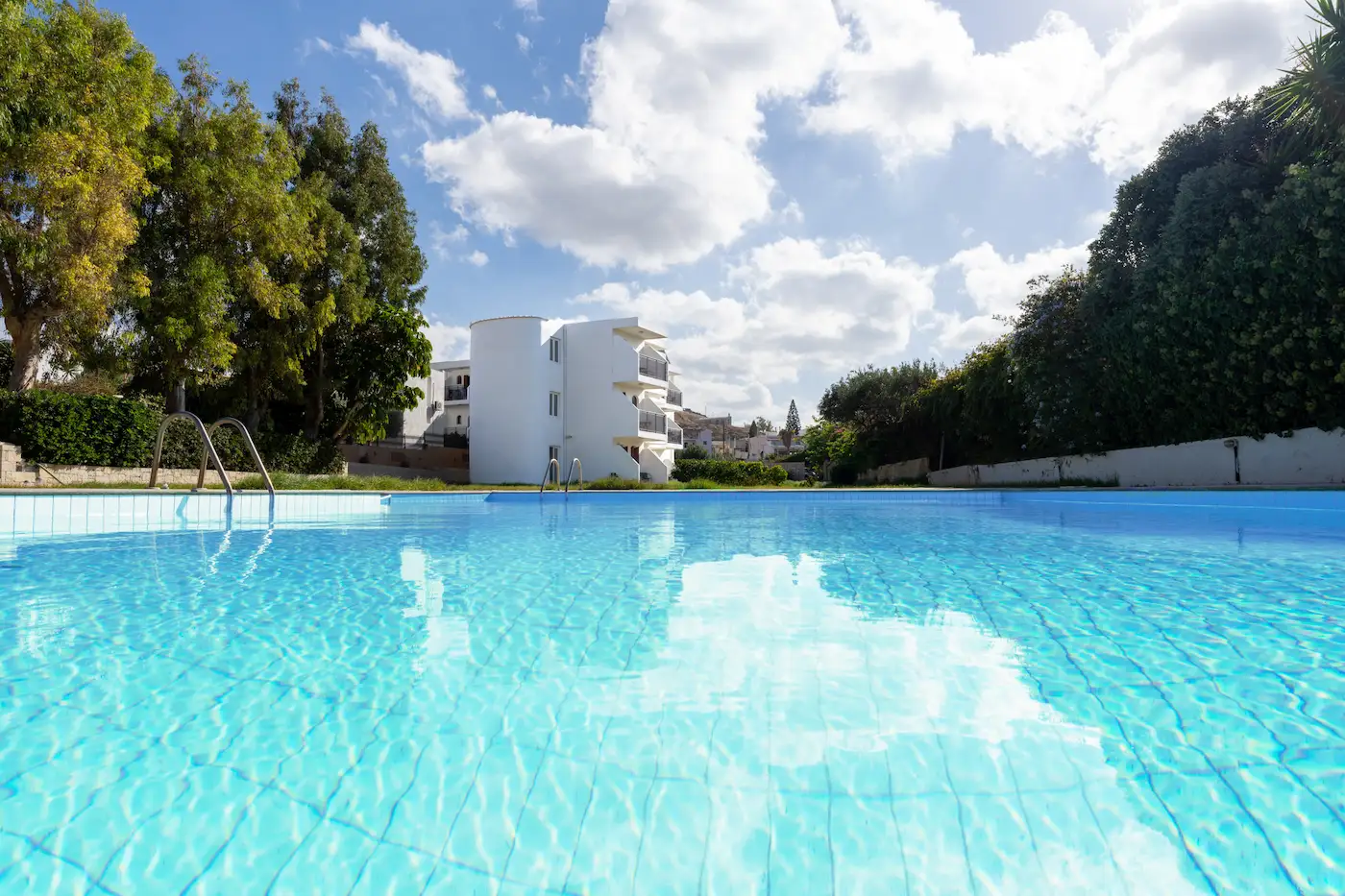
The Pilot's House, a residence reserved for students: private rooms, swimming pool, daily shuttle to the airport.

Accessible admission

Online application, maths multiple-choice test in English (age-15 level) and a video interview. Free, year-round, no commitment.

Life in ESA's classes

Our advice for a successful project

  1. 1

    Get your medical first

    Before any commitment, even before choosing a school. It is the only stage whose outcome does not depend on your work.

  2. 2

    Compare like with like

    Real flight hours, exams, UPRT, English, MCC: look at what each programme actually contains, line by line.

  3. 3

    Favour continuity

    A modular route stretched over five years loses momentum. Skills are built by flying regularly.

  4. 4

    Work on your English now

    It is the first filter at airline selection, and the slowest skill to improve.

  5. 5

    Think “selection” from day one

    Discipline, punctuality, team spirit, presentation: airlines hire a future captain, not just a licence holder.

  6. 6

    Come and ask us your questions

    An online information session takes place every week. It is free, with no commitment, and the quickest way to get a clear picture.

Ready to go from plan to flight deck?

Get the full Airline Pilot course brochure (programme, calendar, admission) or talk to our team live.

Apply now
We answer

A question about this programme?

Admission, medical certificate, funding, life in Crete, joining an airline: every answer is gathered in one place.

Read the FAQ

The regulatory requirements quoted come from Regulation (EU) No 1178/2011 (Part-FCL) and are summarised for information only. Only the official texts from EASA and the national authority are authoritative.